
Low frequency transformers are widely used in industrial electronics, control equipment, audio systems and other OEM applications for voltage conversion and, where required, galvanic isolation.
For custom projects, transformer design should be based on the actual electrical, thermal and mechanical requirements of the equipment rather than a fixed catalog specification.
Quick answer: A custom low-frequency transformer should be designed around input and output voltage, minimum operating frequency, VA rating, load profile, allowable temperature rise, insulation requirements, voltage regulation and mechanical constraints.
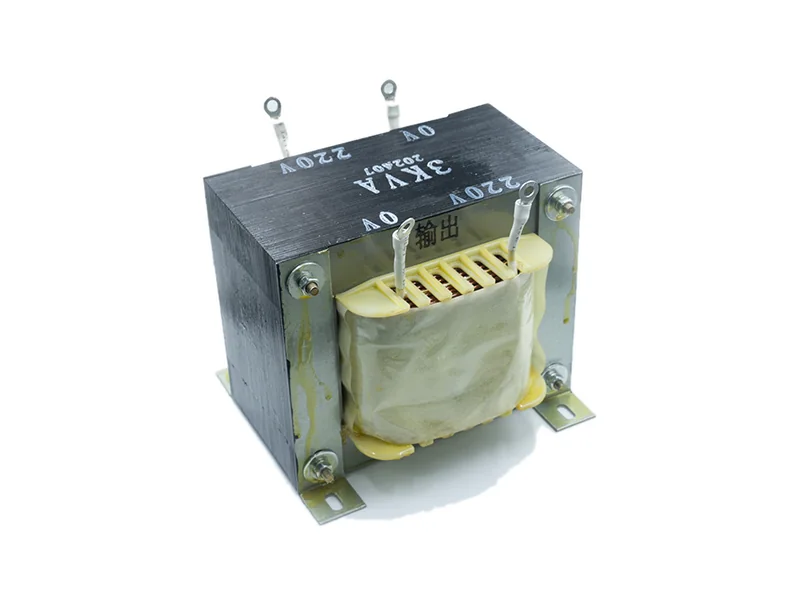
Input and Output Requirements
The starting point for a custom low-frequency transformer is the required primary and secondary voltages, minimum operating frequency, load current and application conditions.
Depending on the application, a transformer may require one or multiple secondary windings, voltage taps, different current ratings or specific winding arrangements. For multi-output designs, the expected simultaneous loading of the secondary windings should also be considered.
These requirements directly influence the turns ratio, conductor selection and winding structure.
VA Rating and Load Conditions
The required apparent power rating is an important design factor, but it should not be considered independently. Engineers should also evaluate minimum operating frequency, load profile, duty cycle, allowable voltage regulation, ambient temperature and allowable temperature rise.
A transformer operating continuously under load may require different thermal considerations from one used intermittently or under changing load conditions.
Core and Winding Design
Core cross-section, lamination material, magnetic operating conditions and winding construction influence core loss, copper loss, temperature rise and overall transformer performance.
For EI-type low-frequency transformers, the core and winding structure can be developed according to the electrical requirements, available installation space and thermal conditions of the equipment.
Different transformer sizes may require different construction approaches, but the design principle remains the same: the transformer should be developed around the actual application rather than selected only by physical dimensions.
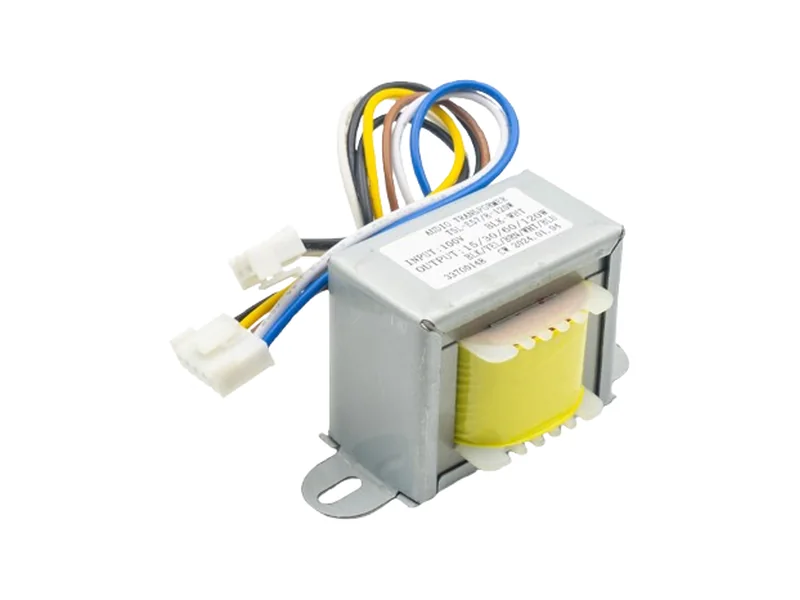
Temperature Rise and Insulation
Temperature rise is an important consideration in low-frequency transformer design. Copper loss, core loss, winding construction, ambient temperature, ventilation and heat dissipation can all affect thermal performance.
Insulation design should reflect the operating voltage, dielectric requirements, insulation system and application environment. Winding insulation, bobbin structure and insulation materials can therefore be selected according to the specific project requirements.
Mechanical Integration
Electrical performance is only one part of a custom transformer project. The transformer must also integrate correctly into the customer’s equipment.
Typical mechanical considerations include overall dimensions, mounting method, terminal position, lead-wire length, installation clearance and enclosure or chassis constraints.
Custom Low-Frequency Transformer Development
KATOY develops custom low-frequency transformers according to customer specifications, drawings, samples and application requirements.
Engineering evaluation can include voltage ratio, current, VA rating, minimum operating frequency, winding configuration, insulation, temperature rise, allowable voltage regulation and mechanical integration. The objective is to develop a transformer that fits the equipment and supports stable, reliable operation.
Learn more about our custom low-frequency transformers or contact KATOY to discuss your project requirements.